Approved Supplier ≠ Safe Supplier
The most common mistake in procurement and global sourcing
Introduction: the most common scenario
One of the biggest mistakes in procurement, sourcing, and supply chain management is believing that once a first order is successful, the supplier is “approved” — and will remain safe indefinitely.
In practice, the first order is usually the supplier’s best behavior.
The problem starts later.
Real-world scenario:
A company approves a Chinese electronics supplier after document checks, a pilot order, and an on-site visit. Everything works well for six months. In month seven, delays begin. In month eight, quality declines. In month nine, they discover the supplier moved facilities, reduced staff, and is prioritizing other clients.
No one was notified. No one was monitoring.
The approval myth
Initial approval typically evaluates:
- Documents (registrations, licenses, certifications)
- Declared production capacity
- Early communication (responsive, structured)
- Competitive pricing
- A first pilot order
Is this correct? Yes.
Is it sufficient? No.
Because approval represents only a snapshot in time.
Why the first order is misleading
During the first order, suppliers are highly motivated:
- They want to win the account
- They focus on flawless delivery
- Communication is fast
- Quality is prioritized
It is later — once the business is secured — that real behavior emerges.
Suppliers change over time
Suppliers are not static. They change:
🏢 Structure
- • New management
- • Facility relocation
- • Workforce reduction
📊 Capacity
- • Larger new clients
- • Production overload
- • Order prioritization
✅ Compliance
- • Expired certifications
- • Regulatory changes
- • Trade sanctions
🌍 Country context
- • Political instability
- • Currency risk
- • Trade barriers
Most companies fail to track these changes.
Approval is not monitoring
The core problem:
Trusting past performance works… until the day it doesn’t.
When problems surface, they already mean:
- Delivery delays
- Rework and unexpected costs
- Operational risk (production stoppages)
- Reputational risk with end customers
The cost of discovering issues too late
Real examples of what happens without monitoring:
Case 1: An Indian supplier relocates without notice. Quality drops 40% in two months. The issue is only discovered after customer complaints.
Case 2: A Brazilian supplier loses ISO certification but keeps operating. An external audit detects it eight months later.
Case 3: A Vietnamese supplier prioritizes a Fortune 500 client. Smaller customers face recurring delays until inventory runs out.
How mature companies handle supplier risk
Mature organizations treat suppliers as monitored assets, not static entities approved once.
- Continuous intelligence: automated signal tracking
- Change alerts: notifications when risk shifts
- Recurring risk assessment: beyond onboarding
- Actionable data: clear recommendations (proceed, monitor, avoid)
Where Supplier Risk Intelligence fits in
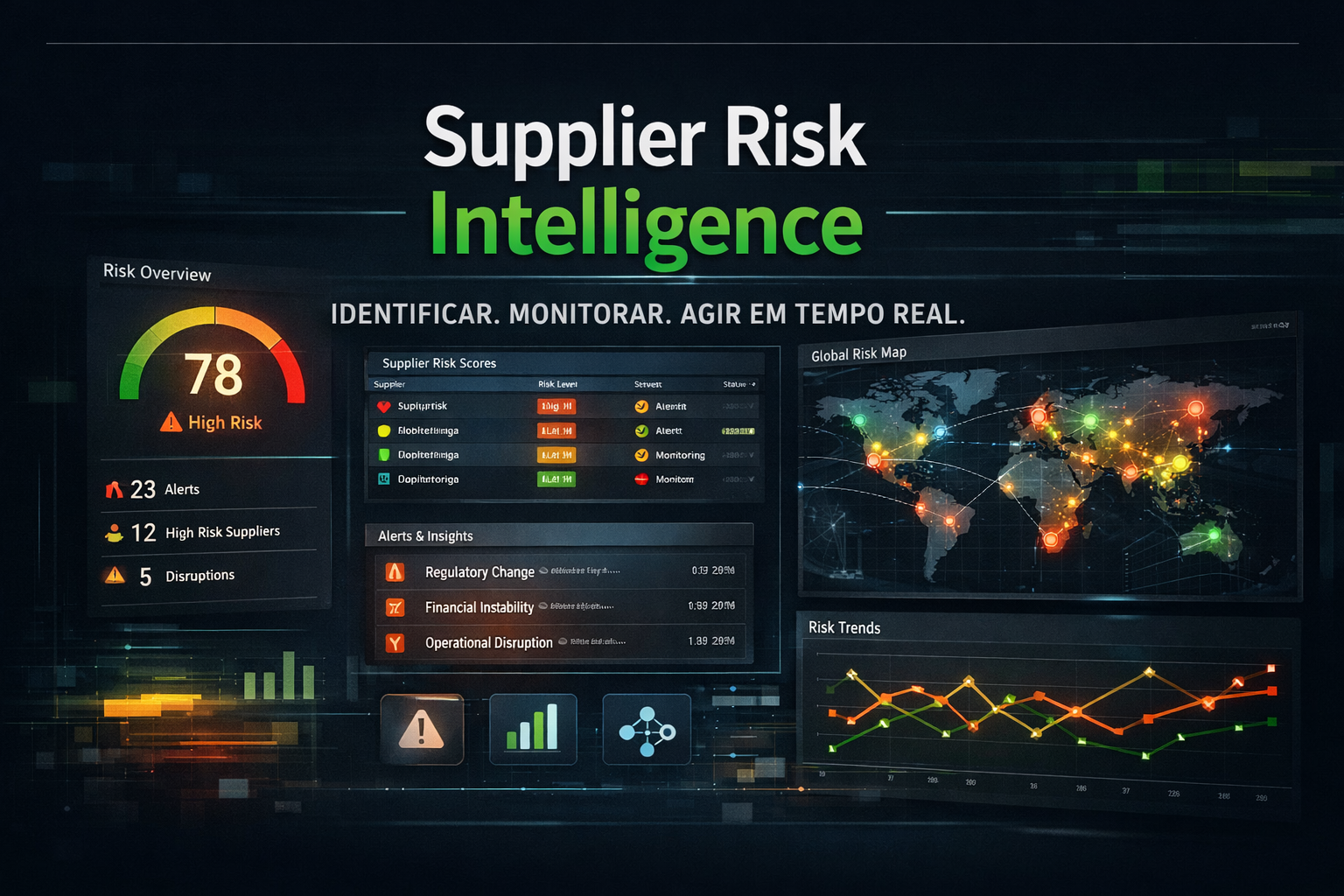
Supplier Risk Intelligence enables continuous monitoring and early detection of supplier risk changes.
- Monitor suppliers in real time
- Detect operational, regulatory, and country risk shifts
- Receive alerts before issues become losses
- Make decisions based on risk — not intuition
Learn more about Supplier Risk Intelligence
Understand how continuous supplier monitoring works in practice.
Conclusion
The buyer didn’t make the wrong initial choice.
Approval is not monitoring.
Suppliers change. Contexts change. Priorities change.
The real question is not:
“Was this supplier approved?”
“Is this supplier still reliable?”